

What changes, why it matters, and how to keep your workforce compliant and comfortable.
If you are responsible for selecting or managing safety eyewear, a standards change is underway. The long‑established EN 166 standard is being replaced by EN ISO 16321, a new international benchmark for workplace eye protection. The aim is straightforward: improve fit, coverage and clarity so safety eyewear is more comfortable to wear, more likely to stay on, and better suited to modern working environments.
You do not need to be a standards expert to take action. Understanding a few key changes will help you remain compliant and make better decisions for your workforce.

Why is EN 166 being replaced?
EN 166 has been the recognised standard for occupational eye protection for over 20 years. During that time, workplace hazards have evolved and expectations around comfort and wearability have increased. The move to an ISO standard also allows for global harmonisation, meaning consistent safety requirements across international markets.
EN ISO 16321 was published in 2023 and became the legally adopted standard in the UK and EU from 11 November 2025. From that point, new certifications must be carried out to ISO 16321. Existing EN 166 certificates remain valid until their expiry date, up to a maximum of five years.
Good to know: EN 166 eyewear does not suddenly become unsafe. Products remain legal and suitable to use while their certificates are valid.
What is EN ISO 16321, in simple terms?
EN ISO 16321 is the new international standard for occupational eye and face protection. It applies to plano and prescription safety eyewear used in workplaces and educational environments.
Compared with EN 166, it places greater emphasis on:
- Fit across a wider range of people
- Defined areas of coverage (orbital protection zones) based on risk
- Clearer labelling and markings
- Real‑world working conditions
The result is a standard that better reflects how safety eyewear is actually worn and used on site.
EN 166 vs EN ISO 16321: the key differences
- Fit and coverage
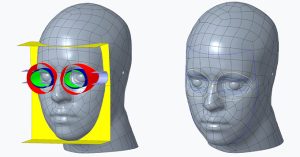
Some of the biggest changes to the standard are shifts in impact speeds, orbital coverage, and how eyewear is tested for fit.
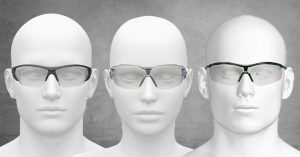
- EN 166 testing was largely carried out on a single medium headform
- EN ISO 16321 requires testing on six different headforms, representing around 95 percent of the world’s population
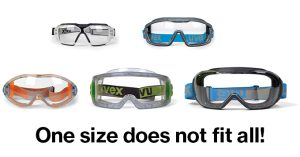
What this means in practice: One style of safety eyewear may no longer suit everyone. Offering different sizes or adjustable models can significantly improve comfort and long‑term compliance.
- Impact protection based on risk, not product type
Under EN 166, impact resistance was closely linked to product category, such as spectacles, goggles or face shields. EN ISO 16321 takes a different approach.
The new standard classifies impact protection based on projectile speed and introduces defined protection zones:
- Orbital protection
- Extended orbital protection
- Full face protection
What this means in practice: Eyewear selection should be driven by the hazards present on site, not just by the type of product traditionally used.

- Updated markings and labelling
While some protective features remain the same, the markings have been updated under ISO 16321. Filter designations for UV, sunglare and infrared protection have changed, and some optional features now use new symbols.
What this means in practice: Product markings may look unfamiliar, but they are designed to provide clearer, more consistent information. If you are unsure, ask for guidance before switching products.

- Clearer scope of application
EN ISO 16321 focuses specifically on workplace eye protection. It excludes areas such as laser protection, sports eyewear and medical applications, which are covered by separate standards.
What this means in practice: ISO 16321 is more precise and relevant to occupational use, helping safety managers specify eyewear with confidence.

- Expanded optional features
The new standard introduces additional optional tests and markings for specialist environments, including:
- Chemical resistance
- Protection against liquid jets
- Radiant heat protection
- Use in explosive atmospheres
What this means in practice: Safety eyewear can be matched more accurately to specific risks, rather than relying on general protection alone.

What does this mean for employers?
The move to EN ISO 16321 is not about making compliance more difficult. It is about improving real‑world protection by focusing on fit, comfort and coverage.
For employers, this means:
- Reviewing whether current eyewear fits the whole workforce
- Understanding updated markings and what they indicate
- Prioritising comfort to support all‑day wear and compliance
Better fit leads to better wear, and better wear leads to safer working practices.

How uvex and Greenham can help
Changes to PPE standards can feel complex, but you do not have to navigate them alone.
uvex designs, selects raw materials, manufactures and packages its safety eyewear in Germany, giving full control over quality, performance and compliance. This end‑to‑end expertise supports a well‑established eyewear fit programme that considers facial shape, working environment, task requirements, lighting conditions and the need for all‑day comfort.
Working together, uvex and Greenham can help you:
- Meet current and future safety standards
- Improve wearer comfort and long‑term compliance
- Select eyewear suited to real‑world working environments
Whether you need help understanding ISO 16321 markings, arranging product trials or carrying out a site‑wide eyewear review, uvex PPE specialists, supported by Greenham, are here to help.
Final takeaway
EN ISO 16321 represents a more inclusive and practical approach to workplace eye protection. Existing EN 166 eyewear remains valid while certificates are in date, so there is no need for immediate change. By focusing on fit, comfort and the risks present in your environment, you can plan a smooth transition and improve protection at the same time.
If you would like guidance on what the new standard means for your site, Greenham and uvex can support you every step of the way.


