

On 16th September each year we observe the International Day for the Preservation of the Ozone Layer. This day marks the anniversary of the Montreal Protocol, signed in 1987 – a global agreement that played a vital role in protecting the ozone layer.
What Is the Ozone Layer?
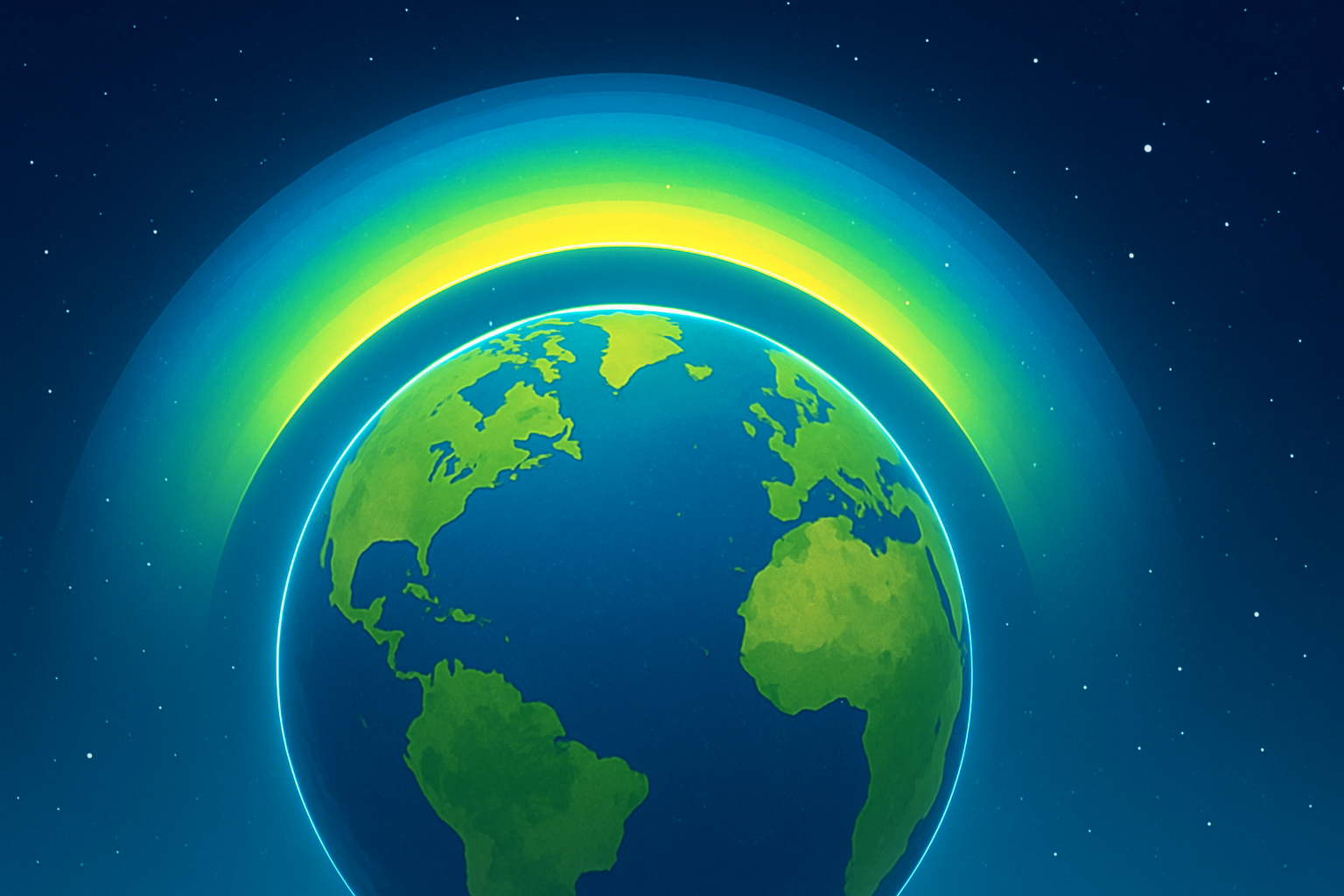
The ozone layer is a band of gas in the Earth’s stratosphere, located about 15 to 30 kilometres above the surface. It acts like a natural sunscreen, absorbing and filtering out most of the sun’s harmful ultraviolet (UV) radiation – especially UV-B rays, which can cause skin cancer, cataracts, and harm ecosystems. It is a critical component of Earth’s atmospheric system, and its protection is essential for both human health and environmental sustainability.
Chlorofluorocarbons (CFCs)
In the 20th century, the ozone layer was under severe threat due to human-made chemicals – especially chlorofluorocarbons (CFCs). These were widely used in refrigeration, air conditioning, foam-blowing agents, and aerosol sprays. Once released into the atmosphere, CFCs slowly rise to the stratosphere, where UV rays break them down, releasing chlorine atoms that destroy ozone molecules. It is estimated that just one chlorine atom can destroy over 100,000 ozone molecules before it is removed from the atmosphere.
The Montreal Protocol
Recognising the growing threat, the global community came together to sign the Montreal Protocol on Substances that Deplete the Ozone Layer in 1987. This treaty aimed to phase out the production and consumption of ozone-depleting substances, particularly CFCs.
Key achievements:
- Nearly 99% of ozone-depleting chemicals have been phased out
- The ozone layer is on track to recover around the middle of the 21st century
- The protocol is the first treaty in the history of the United Nations to achieve universal ratification
Beyond the Ozone: The 9 Planetary Boundaries
While the ozone layer’s recovery is a victory worth celebrating, it is only one piece of the environmental puzzle. Earth operates within nine interlinked planetary boundaries – scientifically defined environmental thresholds that define the safe operating space to maintain Earth’s stability and resilience.
- Climate Change – Driven by greenhouse gas emissions
- Biosphere Integrity – Loss of ecosystems and species
- Land-System Change – Deforestation and land degradation
- Freshwater Use – Overuse and contamination of water supplies
- Biogeochemical Flows – Nitrogen and phosphorus pollution
- Ocean Acidification – Resulting from increased carbon dioxide (CO2) absorption
- Atmospheric Aerosol Loading – Airborne particles affecting climate and health
- Stratospheric Ozone Depletion – Now under control through the Montreal Protocol
- Novel Entities – New pollutants like plastics and synthetic chemicals
As of recent scientific assessments, multiple boundaries have already been breached, threatening the stability of the Earth system. The success of the ozone layer shows us that global action can work, but we must act decisively on all fronts.
The Role of Net Zero
Among the planetary boundaries, climate change is arguably one of the most pressing – and it is directly linked to human emissions of CO2 and other greenhouse gases. To avoid catastrophic impacts, scientists and the IPCC agree that the world must reach net zero emissions by around 2050. Achieving net zero means that any greenhouse gases we release, like CO2 from cars or factories, are balanced out by actions that remove an equal amount of those gases, like planting trees, using carbon capture technology, or reducing emissions in other ways.
Net zero plays a critical role in limiting global temperature rise to no more than 1.5°C above pre-industrial levels, which is essential for avoiding extreme impacts of climate change. Achieving net zero helps protect food and water security by reducing climate-related disruptions to agriculture and water systems. It also lowers the risk of extreme weather events and supports the preservation of ecosystems and biodiversity, ensuring that natural habitats and the species that live in them can continue to thrive.
A Shared Responsibility
The International Day for the Preservation of the Ozone Layer is more than just a celebration of a major environmental achievement; it’s a reminder of what’s possible when the world unites for a common cause. It highlights the effectiveness of global cooperation and underlines the deep connection between environmental protection and climate action. By learning from the Montreal Protocol, we can channel the same urgency, diplomacy, and innovation into addressing climate change. As we mark this day, let it motivate continued action, not just to safeguard the progress made, but to ensure a healthier, more stable planet for future generations.


