

When selecting safety footwear, most people focus on features such as toe protection, slip resistance, waterproofing, and durability. While these are all important considerations, one of the most overlooked components of any safety boot is the footbed.
The footbed is the layer that sits directly beneath your foot inside the boot. Although often hidden from view, it plays a critical role in determining how comfortable, supportive, and effective your safety footwear will be throughout the working day.
Whether you work in construction, warehousing, logistics, manufacturing, utilities, or any other demanding industry, spending long hours on your feet can take its toll. The right footbed can help reduce fatigue, improve posture, enhance comfort, and provide the support needed to stay productive from the beginning of your shift to the very end.
In this guide, we’ll explain why footbeds matter, how to identify your foot arch type, and how to choose the right footbed solution for your safety boots.
Why Footbeds Are Important
Your feet provide the foundation for your entire body. Every movement you make starts from the ground up, and the way your feet interact with the floor can affect your ankles, knees, hips, and lower back.
When foot support is inadequate, the body often compensates by changing posture and movement patterns. Over time, this can lead to discomfort, fatigue, and even musculoskeletal issues.
A properly designed footbed can help:
- Improve comfort during long shifts
- Reduce pressure on key areas of the foot
- Enhance stability and balance
- Promote better posture
- Improve weight distribution
- Support natural movement
- Minimise fatigue
- Improve overall wellbeing
For workers who spend eight, ten, or even twelve hours standing or walking, the right footbed can make a noticeable difference to daily comfort.
Understanding Foot Arches
One of the most important factors when selecting a footbed is understanding your arch profile.
The arch of your foot acts as a natural shock absorber, helping to distribute pressure and support movement. However, not everyone’s arches are the same. Most people fall into one of three categories:
- Low Arch (Flat Feet)
- Medium Arch (Neutral Feet)
- High Arch
Understanding which category applies to you will help determine the level of support you require.
Low Arches (Flat Feet)
People with low arches have little or no visible curve along the inside of the foot.
Common characteristics include:
- A flatter footprint
- Greater contact with the ground
- Feet that roll inward more than normal
- Increased strain on joints
This inward rolling motion is known as overpronation. When overpronation occurs, the body may experience additional stress through the ankles, knees, hips, and lower back.
Workers with low arches often benefit from footbeds that provide additional structure and support to help stabilise foot movement.
Recommended Insole
Rock Fall Tri-shift Activ Step Insole Low – Product Code: 875789
The Tri-shift Activ Step Insole Low is specifically designed for individuals with lower arches. It helps support the foot while promoting better alignment and stability throughout the working day.
Medium Arches (Neutral Feet)
A medium or neutral arch is often considered the most balanced foot type.
People with medium arches typically experience:
- Even weight distribution
- Natural movement patterns
- Good shock absorption
- Balanced foot mechanics
Although neutral arches generally require less corrective support, they still benefit from appropriate cushioning and stability.
Many workers with medium arches find that a supportive footbed improves comfort and helps maintain proper alignment during long shifts.
Recommended Insole
Rock Fall Tri-shift Activ Step Insole Middle – Product Code: 875790
The Tri-shift Activ Step Insole Middle is designed for wearers with a neutral arch profile, providing balanced support and cushioning while helping maintain natural foot positioning.
High Arches
High arches feature a pronounced curve along the inside of the foot.
Common characteristics include:
- Less contact with the ground
- Increased pressure on the heel and forefoot
- Reduced natural shock absorption
- Potential for pressure-related discomfort
Because high arches do not absorb impact as effectively as neutral arches, pressure can become concentrated in specific areas of the foot.
Without proper support, workers with high arches may experience discomfort, particularly during long periods of standing and walking.
Recommended Insole
Rock Fall Tri-shift Activ Step Insole High – Product Code: 875788
The Tri-shift Activ Step Insole High provides enhanced support for higher arches, helping distribute pressure more evenly across the foot while improving overall comfort and stability.
How to Identify Your Arch Type
Before selecting a footbed, it is helpful to determine your arch profile.
One of the easiest methods is the footprint or “wet foot” test.
Step 1
Wet the sole of your foot.
Step 2
Stand on a piece of cardboard, paper, or another surface that will show your footprint.
Step 3
Step away and examine the shape left behind.
Results
Low Arch
Most of the foot appears in the footprint with very little inward curve.
Medium Arch
A noticeable curve appears along the inside edge, with a moderate connection between the heel and forefoot.
High Arch
A large gap appears between the heel and forefoot, leaving only a narrow strip connecting the two.
This simple assessment can provide a useful indication of which level of support may be most appropriate.
Why Arch Support Matters
Arch support is about much more than comfort.
When the foot is properly supported, it helps:
- Maintain alignment
- Improve stability
- Reduce pressure points
- Minimise muscle fatigue
- Enhance movement efficiency
Poor support can force muscles and joints to work harder than necessary, leading to discomfort and fatigue throughout the body.
For workers operating in physically demanding environments, these effects can become particularly noticeable over time.
Signs You May Need a Different Footbed
Many people continue using the standard footbeds supplied with their footwear, even when those footbeds are no longer providing adequate support.
You may benefit from a replacement footbed if you regularly experience:
- Foot fatigue
- Heel pain
- Arch discomfort
- Knee pain
- Lower back pain
- Pressure under the ball of the foot
- General discomfort after long shifts
While these symptoms can have multiple causes, inadequate foot support is often a contributing factor.
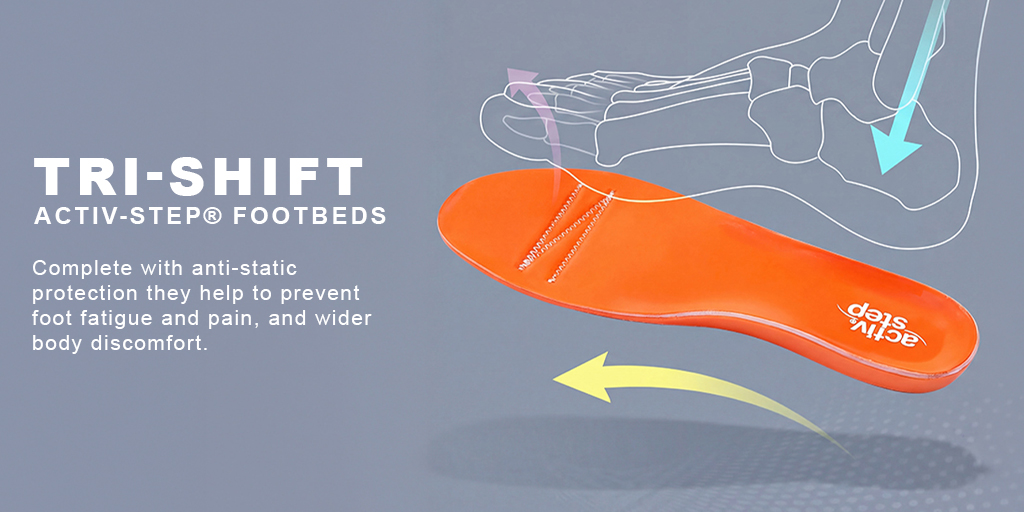
The Tri-shift Activ Step System
The Rock Fall Tri-shift Activ Step range has been developed to provide arch-specific support solutions.
Rather than taking a one-size-fits-all approach, the range offers three distinct footbed options designed to accommodate different arch profiles.
Low Arch Support
Rock Fall Tri-shift Activ Step Insole Low
Code: 875789
Suitable for workers with flatter feet who require greater stability and support.
Medium Arch Support
Rock Fall Tri-shift Activ Step Insole Middle
Code: 875790
Designed for individuals with neutral arches who need balanced cushioning and support.
High Arch Support
Rock Fall Tri-shift Activ Step Insole High
Code: 875788
Created for wearers with higher arches who require additional support and improved pressure distribution.
By matching the footbed to the wearer’s arch type, the system helps create a more personalised fit and improved comfort experience.
Additional Features to Look for in a Footbed
Arch support is only one part of the equation.
When selecting a footbed, consider the following features:
Cushioning
Effective cushioning helps absorb impact forces generated during walking and standing.
Heel Support
A supportive heel cup can help stabilise the foot and improve overall positioning inside the boot.
Breathability
Moisture management is essential for maintaining comfort throughout the day.
Durability
A high-quality footbed should retain its shape and support characteristics even after extended use.
Shock Absorption
Reducing impact forces can help minimise strain on joints and improve overall comfort.
Installing Your New Footbed
To get the best performance from a replacement footbed:
- Remove the existing footbed from the safety boot.
- Compare it with the replacement insole.
- Trim if required according to manufacturer guidelines.
- Ensure the new footbed sits flat inside the boot.
- Check that the heel is correctly positioned.
- Test the fit before prolonged use.
A properly fitted footbed should feel supportive without creating pressure points.
Looking After Your Feet at Work
Your feet work hard every day, so it’s important to look after them properly.
Some simple steps include:
- Wearing correctly fitted safety footwear
- Replacing worn insoles when necessary
- Keeping feet clean and dry
- Changing socks regularly
- Addressing discomfort early
- Seeking professional advice if pain persists
Preventative foot care can help reduce discomfort and improve long-term wellbeing.
The Link Between Foot Comfort and Workplace Performance
Comfortable workers are often more productive workers.
When feet become tired or uncomfortable, concentration can suffer and physical tasks may become more difficult.
By improving comfort and reducing fatigue, the right footbed can contribute to:
- Better focus
- Improved mobility
- Increased comfort
- Reduced strain
- Enhanced workplace wellbeing
For employees spending long hours on hard surfaces, these benefits can be particularly valuable.
Final Thoughts
Safety footwear is about much more than protection. While toe caps, slip resistance, and durability remain essential, the footbed plays a vital role in determining how comfortable your boots feel throughout the day.
Understanding your arch type is the first step towards finding the right level of support. Whether you have low, medium, or high arches, selecting a footbed designed for your specific needs can help improve comfort, reduce fatigue, and support better movement patterns.
The Rock Fall Tri-shift Activ Step range provides three arch-specific options:
- Tri-shift Activ Step Insole Low (875789) for low arches
- Tri-shift Activ Step Insole Middle (875790) for medium arches
- Tri-shift Activ Step Insole High (875788) for high arches
By choosing the correct footbed for your feet, you can create a more comfortable, supportive, and personalised fit within your safety boots—helping you stay comfortable and productive throughout every shift.


