


Workwear with Responsibility: From Strategy to Documented Effect
The requirements for work and protective clothing are evolving. While functionality, comfort, and durability remain foundational, responsibility is now an integral part of the decision-making process. For manufacturers, this means that responsibility cannot be confined to a single initiative or material. It necessitates a holistic approach, considering environmental, social, and business factors throughout the entire value chain. This is the starting point for MASCOT® WORKWEAR, where responsibility is perceived as the complete picture—from material selection to product lifespan and working conditions.
Responsibility Starts with Structure, Not Messages
A common challenge in the industry is that responsibility is often communicated as isolated initiatives. In practice, the effect is limited if it is not anchored in a structured approach. At MASCOT, the work on Corporate Responsibility is built on a strategy developed over more than 40 years. The foundation is the company’s core values—quality and integrity—which also define the way products are developed and produced. This is expressed, among other things, in the “Tested to Work” approach, where testing and documentation are prerequisites, not afterthoughts. The same principle applies to efforts in reducing resource consumption and waste.
From Virgin to Recycled Materials
One of the most visible shifts is the transition from virgin materials to recycled alternatives. At MASCOT, the goal is clear: to phase out the use of virgin materials and replace them with recycled or bio-based alternatives, without compromising on quality and durability. It sounds simple, but it is not. Material shifts affect the entire value chain—from supplier requirements and production to the performance of the final product. Therefore, it is crucial that responsibility does not come at the expense of function. If the lifespan decreases, a significant part of the benefit is lost.
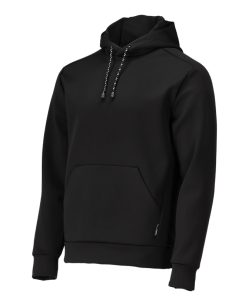
The 22286-608 Fleece hoodie from MASCOT® CUSTOMIZED. It is highly comfortable with a modern fit and has a water and dirt-repellent surface treatment to ensure it says dry and clean throughout the workday.
LCA: From Assumptions to Data
For responsibility to be credible, it requires documentation. Here, life cycle assessments (LCA) play a central role. MASCOT uses LCAs as an active tool in product development. By analysing a product’s environmental impact across materials and processes, it becomes possible to identify where real reductions can be achieved. Instead of general statements about “more responsible products,” one can work with concrete data at the product level. This makes it easier for both retailers and end-users to understand differences and make informed choices.
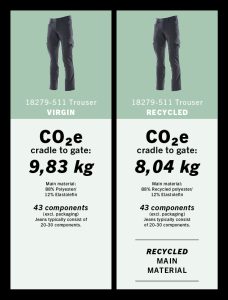
The above is a concrete example of the transition from virgin to recycled polyester. The difference between the two products lies in the material and thus in the CO₂ footprint. By comparing the two variants, it becomes possible to document the specific reduction in CO₂ emissions by using recycled polyester. At the same time, LCA data highlights how many components and processes are included in the calculations. One can choose to delve deeply or keep it general. The point is that data is available, but as the legislation stands now, it is difficult to compare across brands, as there are no standards for the calculations yet.
Responsibility Does Not Stop at the Product
The materials and climate footprint are one part of the equation; social conditions are another. The majority of MASCOT’s products are produced at their own SA8000-certified factories in Vietnam and Laos. The certification documents working conditions and ensures transparency—not only internally but also externally. At the same time, MASCOT systematically works with supplier management through due diligence based on SA8000 and OECD guidelines. This means that requirements for responsibility do not stop at their own production but apply to the entire supply chain. This is where many strategies are challenged in practice.
Durability is Still the Overlooked Factor
In the discussion about materials and CO₂, one factor is often underestimated: lifespan. The longer a product lasts, the lower the total resource consumption over time. Therefore, wear resistance remains one of the most effective ways to reduce environmental impact. For MASCOT, this is closely linked to the ambition to develop products that last in practice, not just on paper. Responsibility is thus not an either-or between materials and performance; it is a both-and.
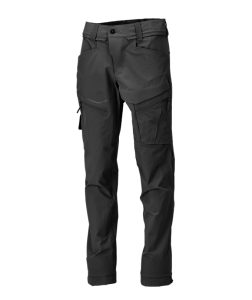
The 22059-605 Functional Trousers have been designed with durability in mind. The ultra-light stretch material ensures unique freedom of movement and the water and dirt-repellent surface treatment ensures help you stay dry and clean for longer. Add your favourite holster pockets using the Click Pocket System to keep your tools close while you work.
From Insight to Practice
It is no longer just about choosing the right product but about understanding the differences behind the products. With better data, greater transparency, and more documentation, it becomes possible to elevate the dialogue. At the same time, the development is ongoing. New materials, stricter requirements, and more advanced tools will continue to drive the industry forward. But one thing is clear: Responsibility has moved from ambition to implementation. Increasingly, the difference is determined where it all starts—in the individual product.


