

The Pros and Cons of Biodegradable Gloves: A Sustainable Approach to Single-Use Protection
As awareness grows around environmental sustainability, industries across the globe are taking steps toward reducing their environmental footprints. One key product in many sectors, especially healthcare, food handling, and cleaning, is the single-use glove. Typically made from materials like latex, nitrile, or vinyl, these gloves often end up in landfills, contributing to the growing issue of overflowing landfills. Biodegradable gloves have emerged as an alternative, promising to reduce this environmental impact. But are they the perfect solution? Let us dive into the pros and cons, the environmental implications of single-use gloves, and how an innovation like our EcoTek solution can help companies meet their sustainability goals.

EcoTek from SW, patent for an environmentally sustainable glove formula and technology. EcoTek is manufactured sustainably to reduce scope 1 and scope 2 emissions. It is also rigorously tested to EN ISO 21420:2020 EN 455-2000-2015 to always ensure hand safety and wearer wellbeing.
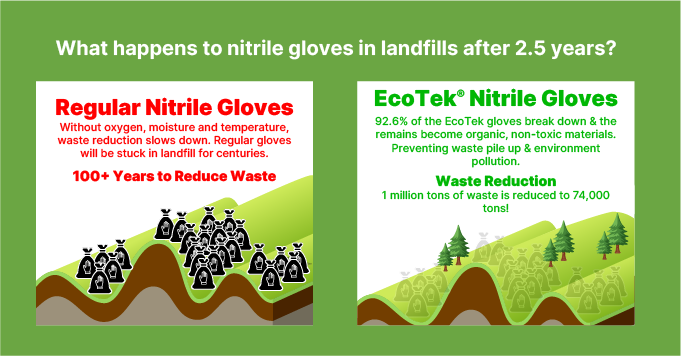
SW has designed a nitrile glove that is designed to biodegrade in landfills more efficiently than standard nitrile gloves. Tested to ASTM D5526-12, which is a test method for determining Anaerobic Biodegradation of Plastic Materials under Accelerated Landfill Conditions.
It is proven that Eco Tek SW Gloves will biodegrade by 92.6% within 945 days (2 years and 6 months). The remaining 7.4% has been verified as non-toxic and safe for the environment, in accordance with ASTM E1963 standards for environmental toxicity screening. This significantly reduces long-term waste accumulation in landfills, alleviates waste overcrowding, and helps lower the overall carbon footprint.
The Impact of Single-Use Gloves on the Environment
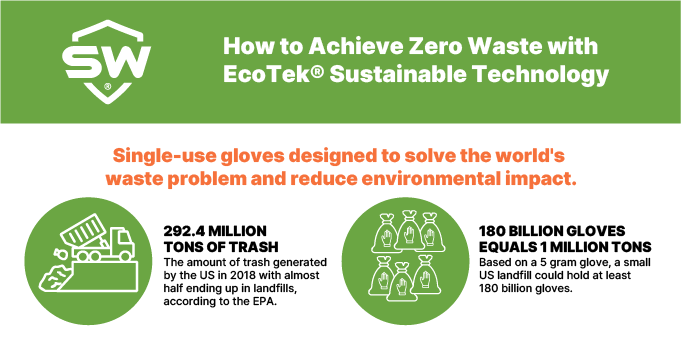
Single-use gloves are an essential part of many industries, from healthcare to food preparation. However, their environmental toll is significant. Millions of gloves are discarded daily, and due to the material, they are made from, most end up in landfills or incinerators.
Statistics on Gloves Disposal:
- Landfills: A substantial number of disposable gloves end up in landfills. It is reported over one million disposable gloves are used globally every minute. A substantial proportion of these gloves, particularly those made from synthetic materials like nitrile or vinyl, do not decompose easily, remaining in the environment for decades. The statistic “over 1 million disposable gloves are used globally every minute” comes from various industry reports and estimates, but specific sources can be tricky to pinpoint because it is based on general usage patterns across multiple sectors. However, studies and reports from organizations like Gloves4Life and industry research papers on PPE waste often cite similar figures. For more detailed and up-to-date statistics, reports from sustainability organizations, government agencies, or specific industry reports on the environmental impacts of single-use gloves, like those published by the Environmental Protection Agency (EPA) or Waste360, may provide more accurate and comprehensive data.
- Incineration: The remainder of these gloves often undergo incineration. While burning waste reduces its volume, the process releases harmful chemicals into the atmosphere, including toxic gases like dioxins and furans, which can be detrimental to both human health and the environment.
The Pros and Negatives of Incinerating Single-Use Gloves
Pros:
- Waste Reduction: Incineration can reduce the volume of waste, meaning less material ends up in landfills.
- Energy Generation: In some cases, incineration can be harnessed for energy production through waste-to-energy plants, which can generate electricity.
- Sustainability goals can be improved.
Negatives:
Release of Toxic Substances: The burning of synthetic materials in gloves (like nitrile and vinyl) can release harmful chemicals into the atmosphere. These chemicals, such as dioxins and other persistent organic pollutants, can cause significant environmental and health risks. Nitrile gloves are manufactured using Nitrile Butadiene Rubber (NBR), which is produced by chemically combining two hydrocarbons (Acrylonitrile and Butadiene). When incinerated at elevated temperatures, the Carbon reacts with the Oxygen to create Carbon dioxide (CO₂) as a by-product. CO₂ is a greenhouse gas and a major contributor to global warming.
Other harmful gases emitted during incineration are the following …
- NO2 Nitrogen Oxide forms ozone gases and causes acid rain and smog. It can lead to respiratory health issues.
- SO2 Sulphur Dioxide Damages Eco ecosystem, including trees and water pollution. Respiratory Health Issues.
- TVOC Total Volatile Organic Compounds, ozone, and smog forming & can cause damage to the Liver & Kidneys. High exposure levels can increase the risk of lung cancer.
- CO Carbon Monoxide reacts with other pollutants in sunlight and produces ground-level ozone, which leads to poor quality air affecting both ecosystems and human health.
- Incineration can leave behind elevated levels of toxic ash residue containing heavy metals and chemical residue. If not responsibly managed, this can leach into the soil and waterways.
- Contribution to Air Pollution: The incineration process contributes to air pollution, affecting both air quality and public health, especially in communities near incineration plants.
- Not a Long-Term Solution: Incineration does not address the root cause of waste, which is the continued use of non-biodegradable materials. It is a short-term solution that still leaves behind the issue of waste generation.
EcoTek offers following incineration benefits to help with these associated negatives.
- 53% less NO2 (Nitrogen dioxide) emissions,
- 82% less SO2 (Sulphur Dioxide) emissions,
- 77% less TVOC (Total Volatile Organic Carbon) emissions,
- 82% less CO (Carbon Monoxide) emissions.
Additionally, EcoTek does not produce detectable levels of dioxins or furans during incineration, contributing to safer and cleaner emissions.
The Dangers to Health and the Planet
The environmental and health risks of single-use gloves are not limited to just the disposal phase. The production of gloves, especially those made from synthetic materials, involves petrochemicals that contribute to greenhouse gas emissions. Additionally, non-biodegradable gloves can leach harmful substances into soil and water sources, leading to further environmental degradation.
On the health front, the continued use of synthetic gloves that are not biodegradable poses risks to both the wearer and the environment. Chemicals used in the manufacturing of these gloves, including certain stabilizers and plasticizers, can cause skin irritation and other health issues. Furthermore, as these gloves are disposed of improperly, they can contaminate ecosystems and harm wildlife.
How EcoTek’s Biodegradable Gloves Can Help Companies Meet Their Sustainability Goals
With sustainability at the forefront of company’s agendas, it is essential to consider how the materials we use can impact the environment. EcoTek, with its innovative formula that is 92.6% biodegradable, offers a significantly more sustainable solution compared to competitors, who typically produce gloves that are only 80% biodegradable.
Let us break down the numbers to see the impact of this difference:
- EcoTek Gloves: With 92.6% biodegradable content, only 7.4% of the glove remains non-biodegradable. This means that a significantly smaller amount of waste will remain in landfills or require incineration, helping to reduce the environmental footprint.
- Competitors’ Gloves: In comparison, if competitors’ gloves are 80% biodegradable, then 20% of their material remains non-biodegradable, potentially contributing to a higher volume of waste that is either left behind in landfills or incinerated. This higher percentage of non-biodegradable material increases the overall environmental impact.
- This comparison shows EcoTek is 2.5 times more effective, now let us imagine one million gloves with EcoTek vs a one million competitor gloves & that’s why EcoTek is such a ground-breaking & sustainable technology.
- By using EcoTek gloves, companies can make a considerable reduction in the amount of waste that does not break down naturally, contributing to their broader sustainability goals.
The Health and Safety of Wearers
While protecting the planet is a critical concern, the health and safety of those who wear gloves regularly is equally important. Our EcoTek gloves have been clinically trialled and are proven skin-safe, ensuring that they provide optimal protection without causing irritation or other skin issues. Moreover, being accredited by the Skin Health Alliance, giving companies and individuals peace of mind that their workers are protected both from environmental hazards and from potential harm due to glove-related skin reactions.

By prioritizing both environmental sustainability and wearer safety, EcoTek gloves offer a balanced solution to the problem of single-use gloves. They help companies align their operations with both ecological and health-conscious goals.
Conclusion: A Greener and Safer Future with SW EcoTek
The issue of single-use gloves and their environmental impact is a pressing one. While biodegradable gloves can significantly reduce landfill waste and lessen the harmful effects of incineration, not all biodegradable options are created equal. With 92.6% biodegradability compared to competitors average technologies of 80%, EcoTek provides a more sustainable option that directly supports a company’s commitment to reducing its environmental footprint.
Moreover, the health and safety of the wearer should never be compromised. With EcoTek’s clinically trialled, skin-safe gloves accredited by the Skin Health Alliance, companies can ensure they are providing both environmental and personal protection.
Choosing a glove solution that is both environmentally responsible and safe for the wearer is no longer a choice but a necessity. With EcoTek, you can protect the planet without compromising the health of those who rely on gloves daily.