
 Looking Beyond Impact: Why UV Protection is Influencing the Future of Workplace Eye Safety
When we think about sustainability, paper hygiene might not be the first thing that comes to mind. But with paper products being used every day across workplaces, washrooms, healthcare, hospitality and public spaces, the choices made in this category can quickly add up.
For Pristine®, sustainability is about looking at the bigger picture. It’s not simply about what a paper product is made from. It’s also about where it’s manufactured, how far it travels, what it’s packaged in and what happens to that packaging once it’s been used.
Made in the UK
One of the simplest things to consider when choosing a paper hygiene product is where it has been made.
Pristine® products are made in the UK, which means they have fewer miles to travel before reaching customers. Keeping those journeys shorter can help reduce the carbon emissions associated with transportation.
It’s also worth looking beyond the material itself. Alternative fibres such as bamboo and sugar cane can have sustainability benefits, but when they are grown and processed thousands of miles away, including in parts of Asia and the Middle East, the journey to the UK becomes part of the overall environmental picture. It’s a good reminder that sustainability isn’t always as straightforward as choosing a particular raw material. Looking at the whole journey can tell a very different story.
For Pristine®, UK manufacturing is one of the ways we can reduce those product miles and take a more considered approach to sustainability.
Recycled fibre at the heart of the range
Recycled material is a key part of the Pristine® range.
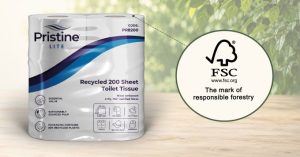
Across every paper category, Pristine® products are available with 100% recycled material, giving existing paper fibres another life rather than relying on virgin fibre.
It’s a simple approach, but one that makes sense. Paper is a valuable resource, so keeping those materials in circulation for as long as possible is an important part of creating a more circular approach to paper hygiene.
Pristine® products are also FSC® certified, giving customers added reassurance around responsible sourcing. For businesses looking to make more informed purchasing decisions, FSC® certification provides an additional level of confidence that responsible forestry has been considered within the supply chain.
Sustainability doesn’t stop with the product
The paper itself is only one part of the picture. Packaging matters too.
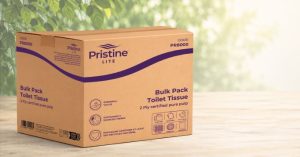
Where possible, Pristine® packaging uses recycled materials. Product boxes are made from recycled material, while CTR film and plastic wrap contain 50% post-consumer recycled (PCR) material.
Roll products also use recycled cores, helping to reduce the amount of new material required across the product.
Individually, these choices might seem relatively small. But when products are manufactured and supplied at scale, those decisions can make a meaningful difference.
It’s a case of looking at the details and asking: can this be done better?
And what happens afterwards?
Another important part of sustainability is what happens once the product has been unpacked.
All post-use Pristine® packaging is recyclable, helping businesses to keep materials within the recycling stream rather than sending them unnecessarily to general waste.
This is an important part of the product journey. Sustainability shouldn’t stop when a product reaches the customer – it should also consider what happens at the end of its useful life.
Looking at the whole picture
There isn’t always one simple answer when it comes to choosing more sustainable paper hygiene products.
A product may use an alternative fibre such as bamboo or sugar cane, but travel thousands of miles before reaching the UK. Another may use recycled material and be manufactured much closer to home. The more you look at the whole journey, the more informed the decision becomes.
That’s the thinking behind the Pristine® approach: considering the product from the raw material through to manufacturing, transportation, packaging and end of life.
Pristine® brings these considerations together across the range. UK-made products, FSC® certification and 100% recycled material across every paper category are complemented by recycled packaging content, recyclable post-use packaging and shorter product miles.
Because sustainability isn’t about ticking one box. It’s about looking at the bigger picture, asking better questions and making choices that make sense from the very beginning.


